I had the good fortune to get media access to the opening event in the year-long Centennial of Naval Aviation (CONA) celebration. The kick-off occurred February 12th at NAS North Island. Not only did we get to shoot from a very advantageous spot on Saturday during the show, but we were able to acquire ramp access to MCAS Miramar, where most of the military aircraft participating in the Parade of Flight and CVW-9 flyover were staging from, and Brown Field, where the vintage warbirds were based.
I will post photos from those various venues over the next few days. This will include the specially marked "retro-camouflage" painted aircraft. Many of those were in attendance at North Island and were a thrill to see. Fortunately most were there on the Friday media-only day. The rest we were able to catch on Saturday before the public was allowed onto the ramp.
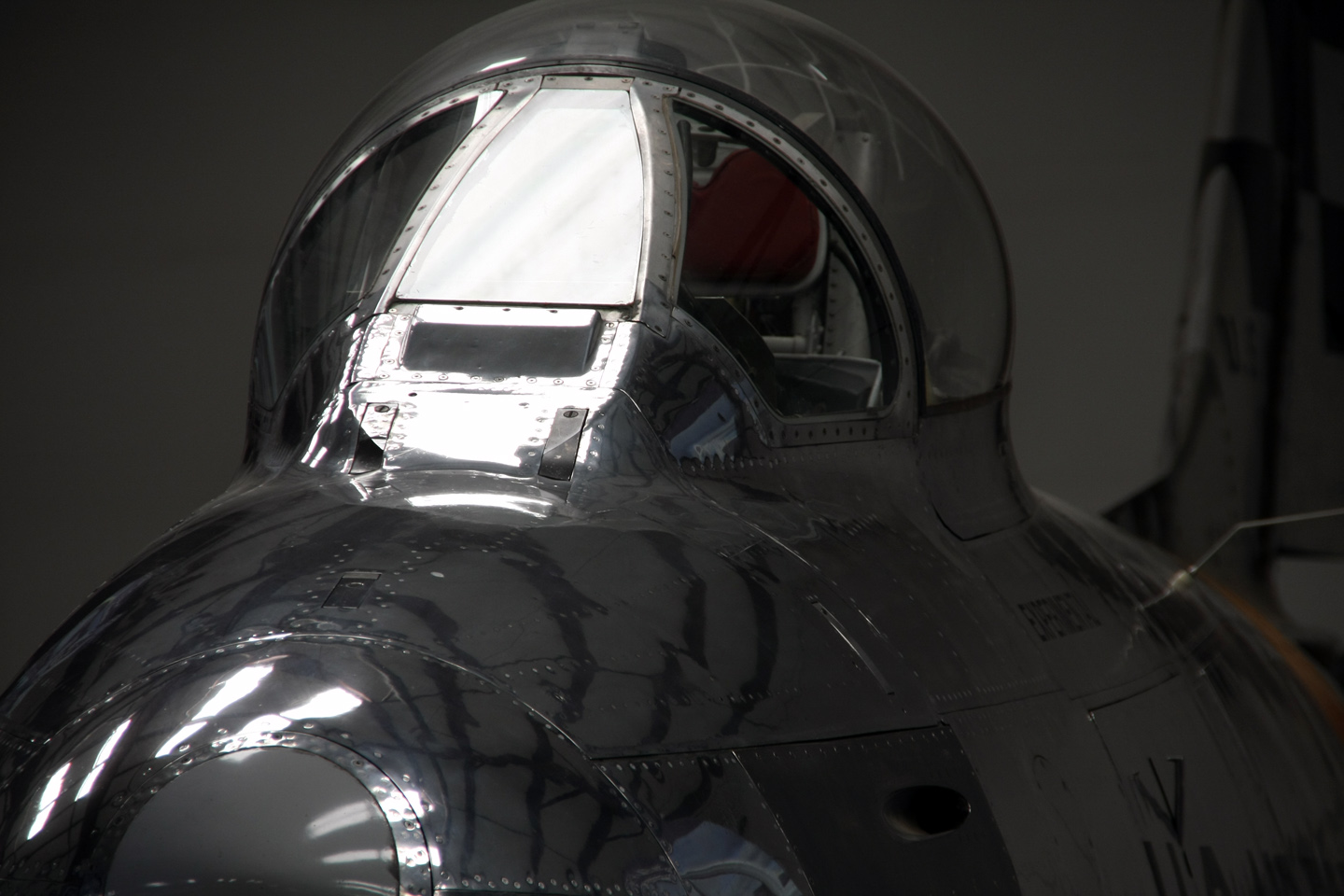
This Northrop (now Northrop Grumman) F-5N Tiger II is from VFC-111 "Sundowners." I was excited to see the full-color tail CAG (Commander Air Group) bird. Usually one airplane per squadron (maybe two) gets the full color treatment as it is reserved for the CAG to fly, if he chooses. It is also the squadron show bird, which is why some go all out on the schemes. In this day and age of gray airplanes it is a refreshing throwback to the Golden Ages of Naval aviation - the 1930s yellow wings and the 1960s vibrant colors in the squadrons.
This one has it all - brilliant tail and sharkmouth to boot: just like the F-14s and F-4s before them. It is one beautiful plane, and a Northrop one at that!
 A parting shot of the Lockheed C-40 Electra Jr. presents a wonderfully abstract blend of reflections and shadows. The passenger window with the barely discernible curtains brings a touch of realism to the image. Again, not everyone's cup of tea, but I love it. The dash of color in the mirrored surface of the engine nacelle and cowl adds a nice element, too.
Sometimes I can see myself in the pictures I take as a distorted self-portrait on the polished metal, but I must have angled myself in such a way that I seemingly have disapparated away from the scene in this shot. Perhaps a trace of me remains; perhaps not. Either way, I am gone like a fleeting memory.
Something like life itself.
 I have this love/hate relationship with aviation museums. On the one hand, it's nice to have aircraft preserved for current and future generations to see and appreciate. On the other hand, many times the aircraft are in a wretched state of preservation and stored or exhibited in less than ideal conditions. Ideally, they should be restored to as near pristine condition as possible and as close to the markings of their real service career, then displayed indoors in a climate-controlled environment.
That, of course, is far from what happens in many places, especially in small, financially-strapped local museums.
Southern California is fortunate in that many such places do have the ability to preserve and display a large part of their collections in great venues. Some friends and I went to two of those museums last weekend: the Yanks Air Museum and the Planes of Fame Museum, both in Chino, CA.
Yanks is the newer of the two at the Chino Airport. The airport has long been the home of Planes of Fame and a whole subsidiary industry dedicated to the restoration and preservation of old warbirds and contemporary air racing craft. Both museums now sport beautiful interior hangar displays and a large collection of flyable and flying articles.
We went to Yanks first because there was a kit collector's show being held inside the facility that day - the reason for our excursion.
While it's great to see such beautifully restored aircraft, the one complaint I have with every such venue is it's a royal pain to get good over-all shots of the individual vehicles. I much prefer to get clean shots outside in nice light. But if they were outside in nice light, they would not be in such great shape for long. Such is the dilemma of museum aircraft.
Nevertheless, neat shots can be had with a little creativity. The image below is an overall view of the legendary North American Aviation P-51D Mustang. The kit show is to the left of the airplane, outside the framing of the shot. It's amazing how much you can hide with careful composition.
 It's a decent shot, but not a great one. Good enough for documentary purposes, though.
However, with a bit of careful positioning and composition, a much more dramatic shot is possible, as is shown in the image that opens today's entry. The Mustang was built with beautiful curves and this angle shows some of those classic lines to good effect. The lighting helps set the mood with dark shadows and bright highlights that accentuate the shape of the airplane. It is a much more expressive shot than the overall picture, but than it should be. After all, that is the difference between art and documentation as each have different objectives in mind. While those objectives are not necessarily exclusive of each other, it is a much more difficult challenge to combine the two - especially in a museum setting.
And that's why I shoot both ways, if possible.
We will explore more such images in the next few entries.
 It is so cute to watch Evie interact with her little brother at this age. She is really quite protective of him. If he gets fussy she'll try to cheer him up. When we were visiting this Christmas she discovered a snowman toy that had a recording of Jimmy Durante singing "Frosty the Snowman." She thought it was the funniest thing, so she had to share with Eoin.
And share she did...over and over and over...and over again. The adults were ready to slit their wrists, but Evie would laugh and stick the snowman in front of Eoin and watch him smile and give his little gasp-y laugh. It cracked her up.
In truth it was pretty funny. And much better to have her wanting to make him laugh than cry. I hope that continues for a long while.


 The Blue Angels opened the Parade of Flight during the CONA celebrations at NAS North Island on February 12. They did a simple six-ship formation pass as they are still training up at NAS El Centro and their season doesn't start for a few more weeks. Nevertheless, the Blues were a de rigueur component of this event.
  This is a shot of the full image. It's still not bad.
 The last photo is a full height crop into a portrait format. I wanted to see what a cover shot might look like. (Well, we can dream, can't we?) Not quite as satisfying as the first shot, but still a decent image. A little PhotoShop tweaking could maybe bring this home. I may have to play around with it and see what happens.